Pet Dental Care in Miami, FL
Crucial for Long-Term Wellness


You likely brush your teeth daily (multiple times) and have your teeth professionally cleaned and examined every year or so.
While we humans prioritize our dental health, we don’t always consider that dogs and cats require dental cleanings and exams, too. Dental care is extremely important for companion animals, and it’s a crucial part of wellness care. Without regular dental care, most companion animals experience some degree of periodontal disease by the time they’re just three years old. And when oral health problems aren’t treated promptly, the consequences can be dire.
At Dollys Animal Clinic, we provide comprehensive pet dental care in Miami and are here to help you care for your pet’s pearly whites. From routine examinations and cleanings to x-rays and extractions, our team does it all and will work with you to ensure that your dog or cat gets the care they need.
The Importance of Dental Care for Pets
Pets are unable to brush their teeth daily. And chances are, you don’t have time to brush their teeth every single day, either. That’s where professional dental care comes in. By having your dog or cat’s teeth cleaned and examined by their veterinarian, you are doing your part to eliminate plaque and tartar buildup and lower the risk of tooth damage, infections, and more. Plus, pets with good oral hygiene typically live two to four years longer than those whose owners neglect dental care.
Periodontal disease causes numerous issues for pets, including bad breath, tooth discoloration, pain, difficulty eating, tooth loss, and infections. Infections originating in the mouth tend to enter the bloodstream and travel throughout the body quickly, potentially resulting in damage to the brain, liver, heart, lungs, and kidneys. Poor oral health lowers your pet’s quality of life and can even reduce their life expectancy.
What to Expect
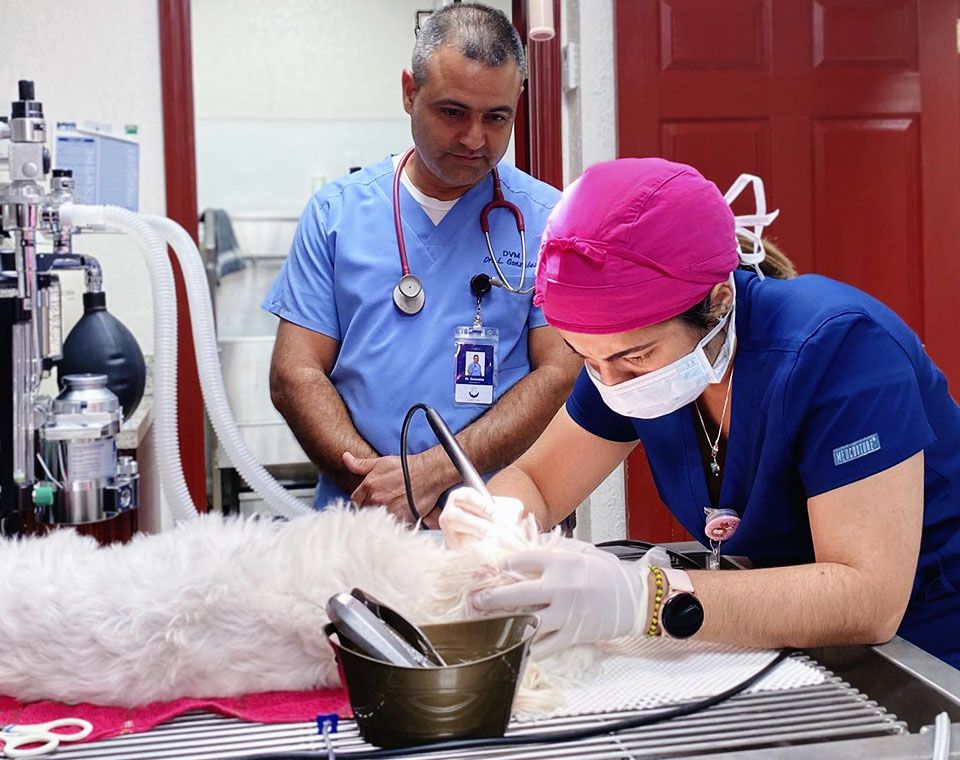
When you bring your pet in for a dental exam and cleaning, we will carefully examine their teeth above and below the gum line. If we uncover any serious problems that require further treatment, we will contact you right away. We will also remove tartar using an ultrasonic scaler that removes plaque and tartar using water and the vibration of sound waves. After scaling, we will gently buff and polish your pet’s teeth. All of this is done while your dog or cat is under general anesthesia to ensure their comfort and safety.
After the cleaning, we’ll provide a thorough analysis of your pet’s oral health along with any recommendations we may have regarding at-home dental care or additional services that may be needed. Our team will also take the time to answer your questions and address any concerns you may have.
FAQs About Dental Cleanings
If your pet is 2.5 years or older, it’s likely time for a dental cleaning. Signs that your pet may need a cleaning include bad breath, red or bleeding gums, difficulty eating, tartar buildup, weight loss, and other symptoms.
Unlike humans, a pet’s mouth is not easy to manipulate without anesthesia, which can lead to continued mouth infections and the need for another cleaning sooner. Anesthesia is required for maximum comfort and best results. Most pets qualify for anesthesia, and we perform pre-anesthetic labs to ensure it’s safe for your pet. Anesthesia is generally safe these days, and the risk of not getting a dental cleaning far outweighs the risk of continued infection that can lead to kidney, heart, and liver disease.
If you have been in recently, we may be able to provide you with an estimate based on your pet’s medical records. Please give us a call to get that started.
The frequency of dental cleanings depends on your pet’s breed, age, and lifestyle. Small breeds are more prone to periodontal disease than larger breeds. It’s important to talk to your vet to determine a schedule for regular dental check-ups and cleanings.
Dental extractions are only performed when absolutely necessary, as they can cause changes in your pet’s bite and how they eat. While some extractions cannot be avoided, such as baby teeth that don’t fall out when permanent teeth come in, many other reasons for extractions can be prevented with proper and regular dental care. Ask us how to best preserve your pet’s teeth.
Call Today for Pet Dental Care in Miami
Dollys Animal Clinic offers urgent care, orthopedic surgery, pet wellness care, in-house laboratory testing, and dental care for dogs and cats in Tamiami, Sweetwater, West Kendall, Westchester.